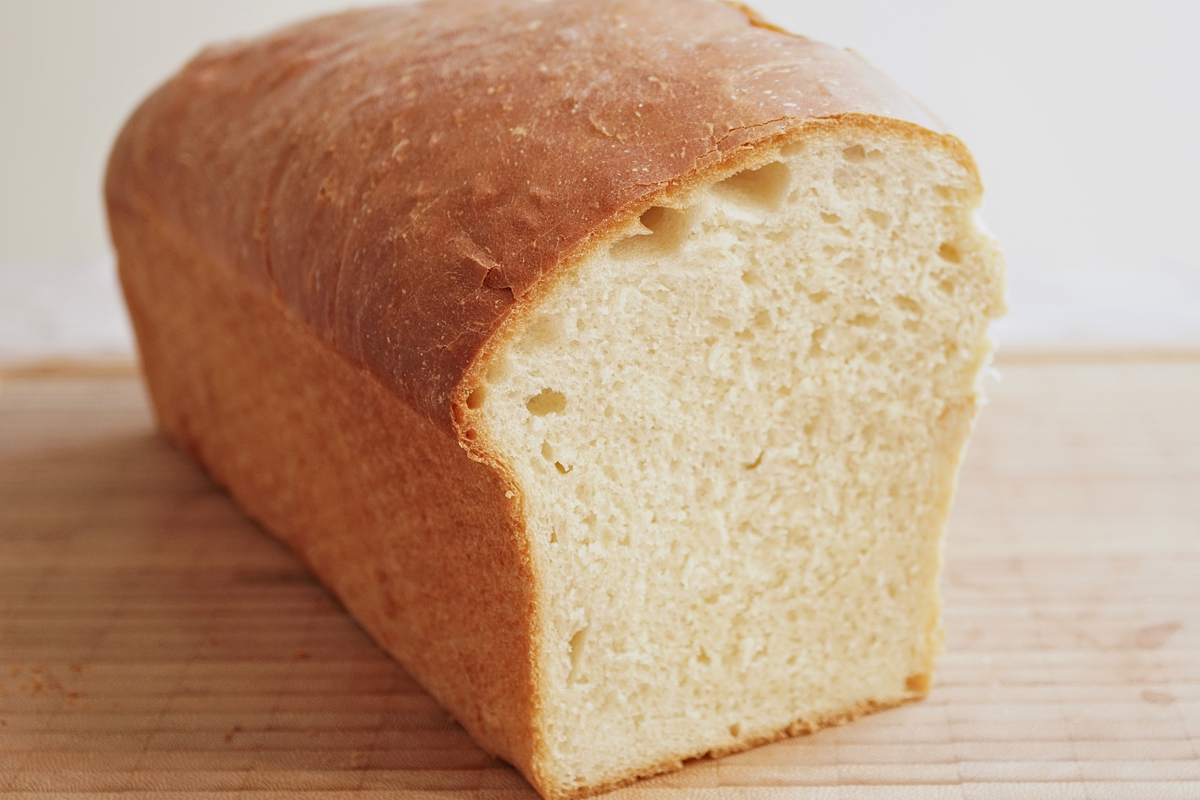
Soft homemade sandwich bread is exactly what all that leftover turkey and ham deserves. Leftover season is officially here, and nothing beats a fluffy, golden loaf from your own oven when the fridge is full of roast meat, cranberry sauce and cheese waiting to be stacked between two slices.
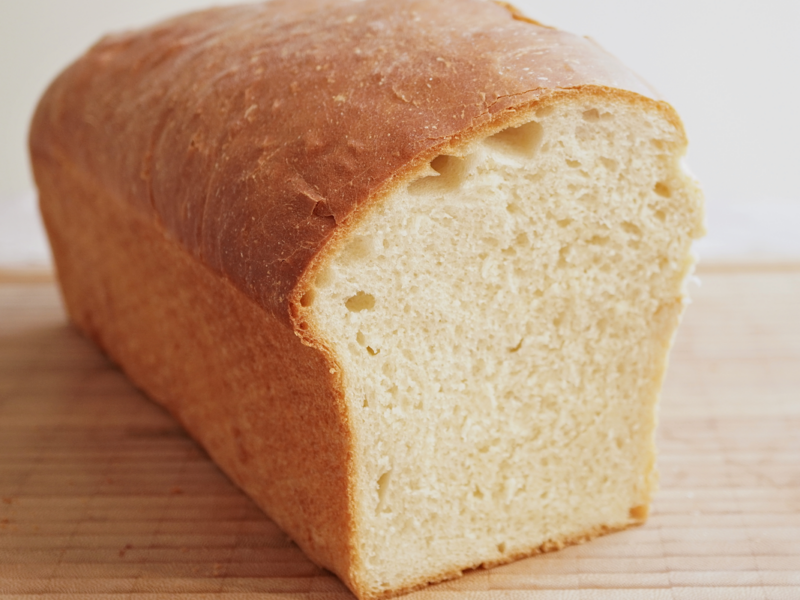
This loaf is lightly sweet from a little honey, rich from the egg and butter, and has that tender, pillowy crumb you want in a good sandwich bread. At the same time, it’s sturdy enough to hold a proper stack of fillings without falling apart or going soggy.
Best of all, sandwich bread needs only a handful of pantry ingredients and a stand mixer does most of the work. The hardest part is honestly waiting for it to cool before you slice it.
Ingredients needed
This recipe makes 1 loaf (about 12 slices).
For the Yeast Mixture
- 260 ml (1 cup + 1½ tbsp) lukewarm water
- 7 g (2¼ tsp / 1 packet) dry yeast
- 30 g (2½ tbsp) sugar
- 1 tbsp honey
The water should feel pleasantly warm on your wrist, around 37–40 °C (100–105 °F). Too hot and it kills the yeast, too cold and the dough will take forever to rise.
For the Dough
- 500 g (about 4 cups) flour
- 10 g (1¾ tsp) salt
- 1 egg, at room temperature
- 40 g (3 tbsp) butter, very soft
All-purpose flour works great here, and bread flour gives the loaf a little more height and chew. Make sure the butter is really soft but not melted, so it kneads smoothly into the dough.
For the Pan
- Butter or oil, for greasing
I bake this loaf in a black Kaiser loaf pan, about 30 cm (12 in) long. A standard 9×5 in pan works too, the loaf will just bake up a little taller.
How to Make Sandwich Bread
1. Activate the yeast
In a jug or small bowl, stir together the lukewarm water, yeast, sugar and honey.
Leave it for 5–10 minutes until the surface is foamy and bubbly. If nothing happens after 10 minutes, your yeast is probably old or the water was too hot. Start again with fresh yeast rather than risking a flat loaf.
2. Mix the dry ingredients
While the yeast is waking up, add the flour and salt to the bowl of your stand mixer and give them a quick stir so the salt is evenly distributed.
3. Make the dough
Pour the foamy yeast mixture and the egg into the flour. Using the dough hook, knead on low speed for 2–3 minutes, until everything comes together into a rough, shaggy dough.
4. Knead in the butter
Add the soft butter a little at a time, letting each piece work into the dough before adding the next.
Don’t panic if the dough looks greasy and falls apart for a moment. Just keep kneading and it will come back together. Knead for about 8–10 minutes on low to medium speed, until the dough is smooth, elastic and pulls away from the sides of the bowl.
5. Let it rise
Cover the bowl with a kitchen towel or cling film and leave the dough in a warm spot for 60–90 minutes, until doubled in size.
6. Shape the loaf
Grease your loaf pan. Turn the dough out onto a lightly floured surface and press it into a rectangle roughly the length of your pan.
Roll it up tightly from the short side into a log, pinch the seam closed and place it seam side down in the pan.
7. Second rise
Cover the pan and let the dough rise again for 45–60 minutes, until it domes just above the rim.
Towards the end of the rise, preheat your oven to 180 °C (350 °F).
8. Bake
Bake for 35–40 minutes, depending on your oven, until the top is deep golden and the loaf sounds hollow when you tap the bottom.
If the top browns too quickly, loosely cover it with a piece of foil for the last 10 minutes.
9. Let it cool completely
Take the bread out of the pan and let it cool completely on a wire rack before slicing.
Yes, this is the hardest part! But cutting into a warm loaf squashes the soft crumb and makes it gummy, so give it time.
Tips and Tricks for the Best Sandwich Bread
- Check your water temperature. Lukewarm is key. If it feels hot on your wrist, let it cool a little before adding the yeast.
- Add the butter slowly. Kneading the butter in gradually gives the gluten time to develop first, which is what makes the bread soft but still strong enough for sandwiches.
- Do the windowpane test. Stretch a small piece of dough thin. If you can see light through it without it tearing, it’s kneaded enough.
- Find a warm spot. In a cold kitchen, let the dough rise in the oven with only the light switched on.
- Shape it tightly. A tight roll gives you an even, tall loaf without big air pockets.
- For an extra-soft crust, brush the top with a little melted butter straight out of the oven.
- Not sure if it’s done? The inside should read 88–93 °C (190–200 °F) on a kitchen thermometer.
Storage and Freezing
Once completely cool, wrap the bread tightly or keep it in a bread bag or airtight container at room temperature for up to 3–4 days.
For longer storage, slice the loaf and freeze the slices in a freezer bag for up to 3 months. You can toast them straight from frozen, so you always have sandwich bread ready.
And if a few slices go a little dry, don’t throw them away. Day-old sandwich bread makes the best French toast.
Sandwich Bread
Ingredients
Method
- Stir the lukewarm water, yeast, sugar and honey together. Leave for 5–10 minutes until foamy.
- Meanwhile, add the flour and salt to the bowl of your stand mixer.
- Pour in the activated yeast mixture and the egg. Knead with the dough hook on low speed until the dough comes together, 2–3 minutes.
- Gradually add the soft butter, a little at a time, and keep kneading for 8–10 minutes until the dough is smooth and elastic.
- Cover and let rise in the bowl for 60–90 minutes, until doubled.
- Shape into a tight log and place seam side down in a greased loaf pan.
- Cover and let rise again for 45–60 minutes, until the dough domes just above the rim. Preheat the oven to 180 °C (350 °F).
- Bake for 35–40 minutes, depending on your oven, until golden and hollow-sounding when tapped.
- Remove from the pan and let cool completely on a wire rack before slicing.


Leave a Reply