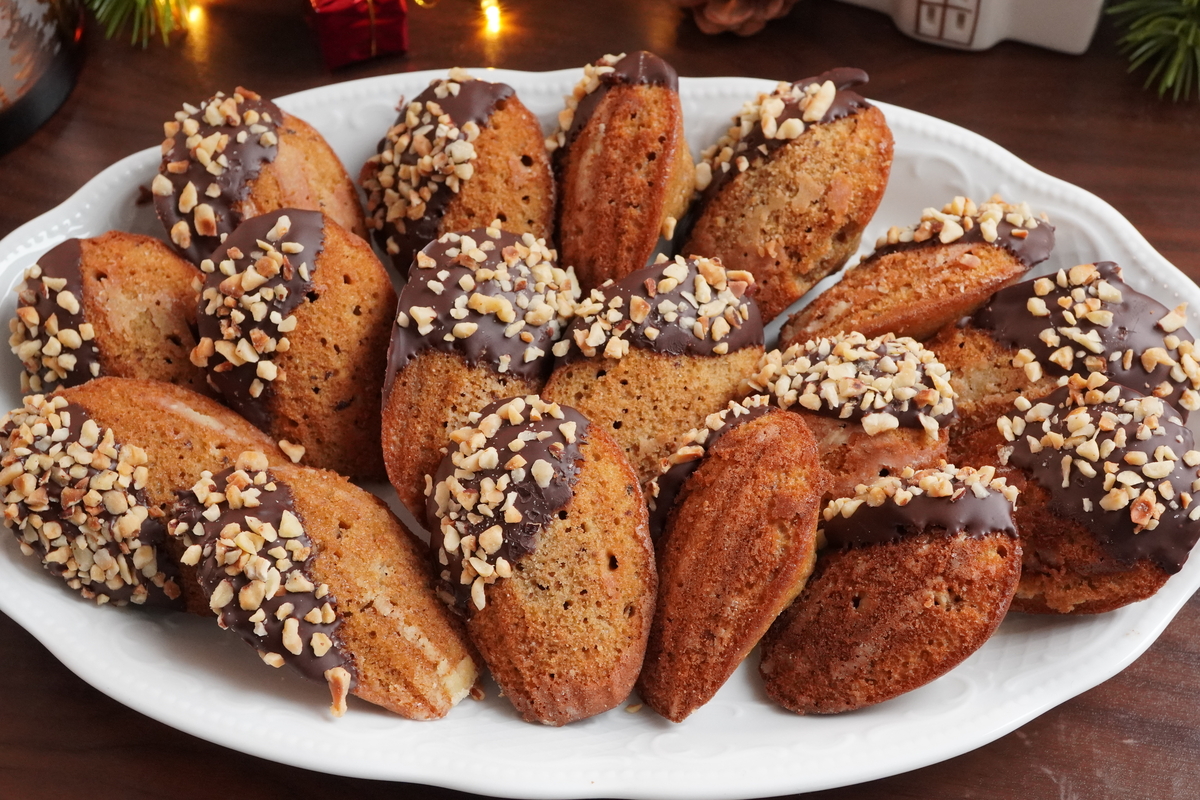
These Hazelnut Espresso Madeleines are something special. The combination of nutty brown butter, toasted hazelnuts and espresso is absolutely wonderful, and the aroma while they’re baking is out of this world. They’re soft and delicate on the inside, with lightly golden edges, a rich coffee flavour and just enough sweetness.
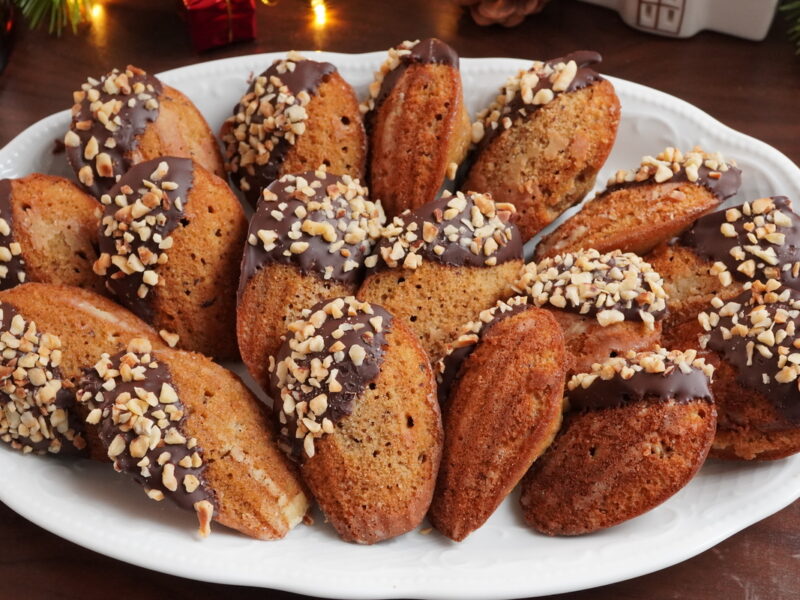
I decided to dip them diagonally in dark chocolate and finish them with finely chopped toasted hazelnuts. Not only does it make them look beautiful, but the slight bitterness of the chocolate works perfectly with the buttery, nutty flavour.
They’re perfect alongside an afternoon coffee and would make a lovely addition to a Christmas cookie platter. And if you’ve never made madeleines before, don’t be intimidated. They’re easier to make than they look, although a little patience is needed while the batter chills.
Ingredients Needed
You can find the exact measurements in the recipe card below.
- Unsalted butter: Browning the butter gives these madeleines their rich, nutty flavour. Be sure to keep all those little golden-brown bits, as they’re full of flavour.
- Eggs
- Granulated sugar
- Honey: Helps keep the madeleines soft and tender.
- All-purpose flour
- Finely ground hazelnuts: You can use hazelnut flour or finely ground toasted hazelnuts for a more pronounced nutty flavour. Ground almonds are also a good substitute, although the flavour will be slightly different.
- Baking powder
- Instant espresso powder: Make sure to use instant espresso powder, not ground coffee. Adjust the amount depending on how strong you like your coffee flavour.
- Hot water
- Vanilla extract
- Salt
- Dark chocolate: I recommend 55–60% cocoa solids for a lovely balance of sweetness and bitterness. Milk chocolate also works if you prefer a sweeter finish.
- Toasted hazelnuts: Finely chopped for decoration and a little extra crunch. Chopped almonds or pistachios would also work beautifully.
How to Make Hazelnut Espresso Madeleines
1. Brown the Butter
Place the butter in a small saucepan over medium-low heat. Allow it to melt, stirring or swirling the pan occasionally.
The butter will begin to foam, and the milk solids at the bottom will gradually turn golden brown. Once it smells wonderfully nutty and the little brown specks are amber-coloured, remove it from the heat.
Pour the butter into a heatproof bowl, making sure to include all those flavourful brown bits.
Weigh the browned butter and add enough water to bring it back to 120 g. This replaces the moisture lost during browning and keeps the recipe proportions consistent.
Set aside until lukewarm.
2. Prepare the Espresso
Dissolve the instant espresso powder in one teaspoon of hot water. Stir until smooth and allow it to cool.
3. Whisk the Eggs and Sugar
In a mixing bowl, combine the eggs, granulated sugar and honey.
Whisk for approximately 2–3 minutes, until the mixture becomes pale, foamy and slightly thicker.
4. Add the Dry Ingredients
In a separate bowl, combine the flour, finely ground hazelnuts, baking powder and salt.
Add the dry ingredients to the egg mixture and gently fold them together with a spatula until just combined.
Avoid overmixing, as this can make the madeleines dense.
5. Add the Espresso and Brown Butter
Fold in the dissolved espresso and vanilla extract.
Take a small amount of batter and stir it into the lukewarm browned butter until combined. Pour this mixture back into the main bowl and gently fold everything together.
The finished batter should be smooth and glossy.
6. Chill the Batter
Cover the bowl and refrigerate for at least 4 hours, preferably overnight.
Chilling allows the batter to firm up and helps create the characteristic madeleine hump during baking.
7. Prepare the Madeleine Mould
Preheat your oven to 200°C (400°F), conventional heat.
Lightly butter each cavity of the madeleine mould, then dust with flour. Tap out any excess.
Transfer the cold batter to a piping bag and fill each cavity approximately three-quarters full.
There’s no need to spread the batter into the corners of the mould.
8. Bake the Madeleines
Bake at 200°C (400°F) for 4 minutes.
Without opening the oven door, reduce the temperature to 180°C (350°F) and continue baking for another 5–7 minutes.
The madeleines are ready when their edges are golden and the centres spring back gently when touched.
Allow them to rest in the mould for 2–3 minutes before transferring them to a wire rack.
9. Decorate with Chocolate and Hazelnuts
Once the madeleines have cooled completely, melt the dark chocolate gently over a bain-marie or in short intervals in the microwave.
Dip each madeleine diagonally into the melted chocolate, allowing the excess to drip off.
Place them on parchment paper and sprinkle the chocolate with finely chopped toasted hazelnuts.
Leave until the chocolate has completely set.
Tips & Tricks
- Don’t skip browning the butter. It gives these madeleines their distinctive nutty flavour. Watch it carefully towards the end, as the milk solids can burn quickly.
- Weigh the butter after browning. Adding a little water to bring it back to its original weight ensures the correct amount of moisture in the batter.
- Chill the batter thoroughly. At least 4 hours is recommended, although overnight is even better. Cold batter and a properly preheated oven encourage that classic madeleine hump.
- Prepare the mould carefully. Even non-stick madeleine pans benefit from a thin coating of butter and flour to help the delicate shells release cleanly.
- Avoid overfilling. Fill each cavity about three-quarters full to give the batter room to rise.
- Don’t overbake. Madeleines are small and can dry out quickly. Look for lightly golden edges and soft, springy centres.
- Use good-quality chocolate. Dark chocolate with 55–60% cocoa solids balances the sweetness and complements the espresso beautifully.
Storage
Madeleines are at their best on the day they’re baked, when their edges are delicate and the centres are wonderfully soft.
At room temperature: Store in an airtight container in a cool, dry place for up to 2–3 days. Keep them away from direct sunlight or heat, especially once decorated with chocolate.
Freezing: Undecorated madeleines can be frozen for up to 2 months. Allow them to cool completely, then freeze in an airtight container with parchment paper between the layers.
Thaw at room temperature and decorate with melted chocolate and toasted hazelnuts before serving.
Make ahead: The batter can be prepared the evening before and refrigerated overnight, making it easy to bake fresh madeleines the following day.
Hazelnut Espresso Madeleines
Ingredients
Method
- Melt the butter over medium-low heat, stirring occasionally, until golden brown and nutty-smelling. Transfer to a heatproof bowl with all the browned milk solids. Weigh and add enough water to bring it back to 120 g. Cool until lukewarm.
- Dissolve the espresso powder in 5 g (1 tsp) hot water and allow to cool.
- Beat the eggs, sugar and honey for 2–3 minutes until pale and foamy.
- Combine flour, ground hazelnuts, baking powder and salt. Gently fold into the egg mixture until just combined.
- Fold in the dissolved espresso and vanilla extract.
- Mix a small amount of batter into the lukewarm browned butter, then fold this mixture back into the remaining batter until smooth and glossy.
- Cover and refrigerate for at least 4 hours, preferably overnight.
- Preheat the oven to 200°C (400°F), conventional heat. Butter and flour the madeleine mould, tapping out excess flour. Pipe cold batter into each cavity until approximately ¾ full.
- Bake for 4 minutes at 200°C (400°F), then reduce to 180°C (350°F) without opening the oven. Bake for another 5–7 minutes until the edges are golden and the centres spring back.
- Leave in the mould for 2–3 minutes, then transfer to a wire rack to cool completely.
- Melt the dark chocolate. Dip each madeleine diagonally into the chocolate and sprinkle with finely chopped toasted hazelnuts. Allow the chocolate to set.
Notes
- For the best results, chill the batter overnight.
- Use instant espresso powder, not ground coffee.
- Madeleines are best enjoyed fresh, ideally on the day of baking.
- Store in an airtight container at room temperature for up to 2–3 days.
- Undecorated madeleines can be frozen for up to 2 months.
- Baking time may vary slightly depending on the size and material of your mould.
Leave a Reply